
Shopify search and recommendations: can shoppers find the right item?
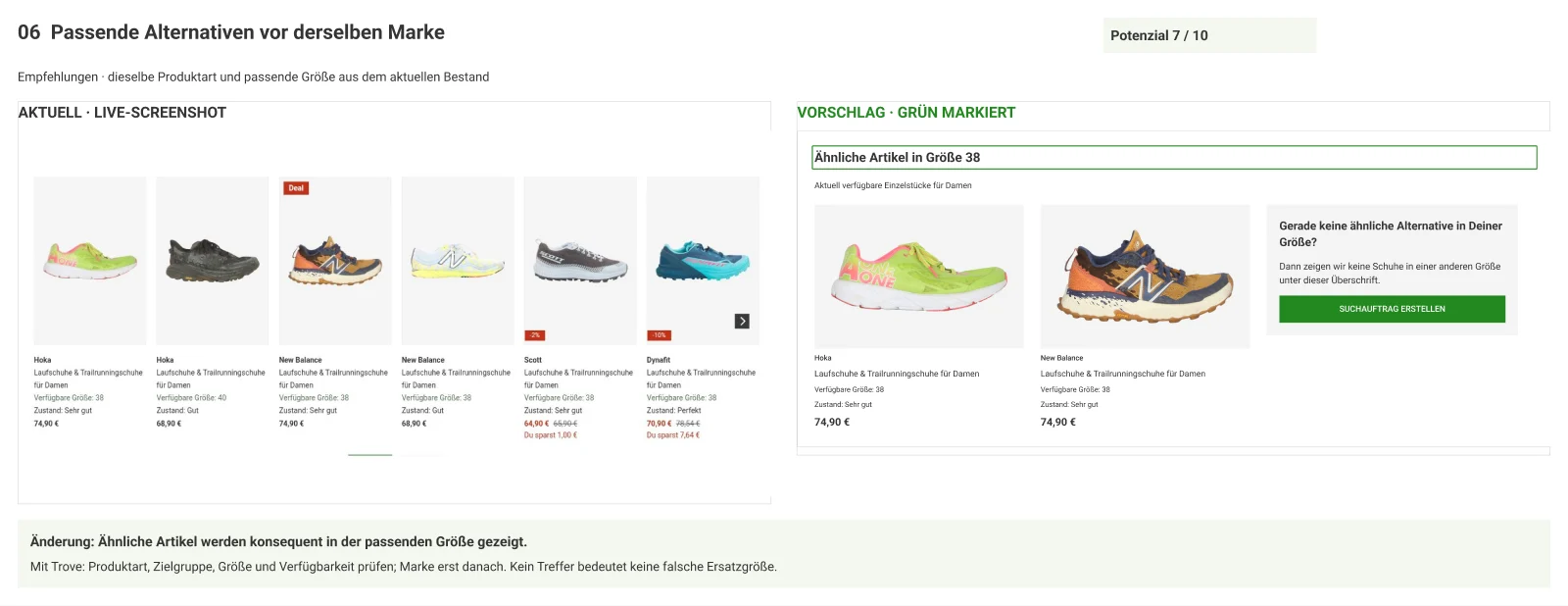
People using search often have something specific in mind. A result can still be useless if the item is sold out, their size is unavailable or the catalogue uses unfamiliar words. Check these cases before adding another tool.
Start with real search tasks
Collect frequent queries, searches without useful results and wording from support conversations. Add a SKU, a typo and a search based on intended use. Write down what a helpful result would look like for each.
Shopify storefront search and Search & Discovery provide search, filter and recommendation features. Your catalogue and theme determine whether those features meet the need.
Filters depend on consistent data
A size filter is less useful when equivalent values have different spellings. Standardise relevant attributes and check whether values belong to the product or variant. Available filters should suit the collection being browsed.
On mobile, test selecting several filters, understanding their effect and clearing them. Empty results should offer a useful next step. Include keyboard operation in acceptance testing.
Give recommendations a clear purpose
Complementary products and alternatives solve different tasks. An accessory may support the chosen product, while an alternative should preserve the original purchase intent. Shopify's recommendation documentation explains eligibility and manual adjustments. Verify availability and theme support.
For one-off items or limited sizes, this matters particularly. The Bergzeit RE-USE project illustrates why available size belongs in the decision.
Measure completion of the task
Monitor unhelpful searches, subsequent product visits and the rest of the purchase journey. Do not compare search users with everyone else without considering their different initial intent.
A useful first brief can be small: improve ten important search tasks and verify that they work consistently. Further personalisation needs appropriate data, assortment and measurement. Our CRO guide helps set that priority.