
Shopify CRO with low traffic: What you can still improve
Your store gets visitors but few orders. One day almost nothing sells; the next brings several purchases. You change a headline and wonder a week later whether it helped. With low traffic, that's difficult to answer. Useful work is still possible. You can discover where people struggle, improve information and correct technical faults without waiting for a large A/B test.
I start by separating what we can observe from the effect we merely suspect. A variant selector that cannot be operated is a specific problem. Higher sales after a text change may have several explanations. Keeping those apart produces a useful work plan. You don't need to postpone every idea or describe every good week as proof of success.
Check who is arriving
A low purchase rate says little about a product page on its own. Visitors arrive with different intentions. One needs a care guide for something already purchased. Another compares prices and delivery dates. Someone else follows a very general advertisement. Look at traffic sources and landing pages before turning an overall rate into a design decision.
For organic search, queries and destination pages help explain those differences. For campaigns, compare the advertisement's promise with the store entry. Is the advertised product visible? Is the offer available? Does the price match? That review may explain why people stop. A different button color won't resolve a contradiction between the advertisement and the actual offer.
Check measurement against a complete journey
Before improving a metric, establish what it counts. A page view, a purchase-button click and a completed order are different events. Follow the journey yourself and check with the responsible person that the expected steps are recorded. Allow for consent choices and the limits of your measurement setup. Missing analytics events don't automatically mean that nobody placed an order.
Compare reporting with actual orders in the commerce system. Test purchases, cancellations and other internal activity should remain identifiable. With few purchases, one order can noticeably change the percentage. Always show the absolute count beside the rate. Two extra purchases may be welcome, but they don't provide a reliable explanation of why they happened.
Watch someone attempt a real task
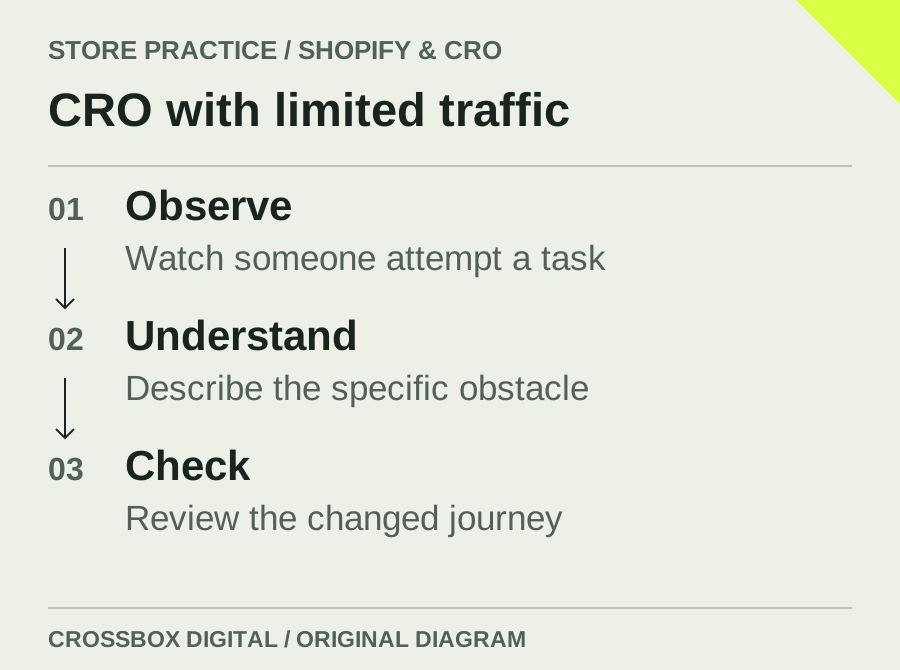
Ask suitable participants to complete a particular shopping task. They might need to find a jacket for a defined activity and work out whether the right size will arrive in time. Observe the attempt. Don't guide them through navigation or defend the design. If you have to explain where information lives, you've already learned something about the journey.
These sessions reveal problems and possible causes. They don't establish the size of a future sales improvement. Nielsen Norman Group distinguishes qualitative investigation from quantitative measurement. A small qualitative round can help identify concrete obstacles. It cannot provide a representative purchase rate for your audience. Qualitative and quantitative usability studies
Give tasks that don't reveal the answer
“Can you find our size guide?” points someone toward a particular feature. A better task describes the situation: you're deciding between two sizes and want to choose which to order. You can then see which information the person seeks. They may begin with photos or measurements. Returns may become relevant because uncertainty remains even after reading the product details.
Ask about a moment you actually observed. What did the person expect there? Which information was missing? Avoid converting every general opinion into a requirement. “I like larger pictures” differs from an observation that a fabric detail couldn't be seen in the existing photo. A specific observation gives implementation a much better direction.
Use questions your service team already receives
Even a small store often holds useful evidence. Review recurring questions asked before purchase. Are people unsure about dimensions, compatibility, package contents or how to use the product? Connect those questions to the affected pages. If the answer only arrives by email, consider whether it could be made available at the relevant point in the store.
Treat each response as an individual case initially. Record the date, product and situation without collecting unnecessary personal information in the working list. Patterns may emerge over time. If several people ask about the same issue and a usability session reveals it too, a change becomes better supported. Ticket counts alone still don't tell you how many visitors are affected.
Address visible obstacles before preferences
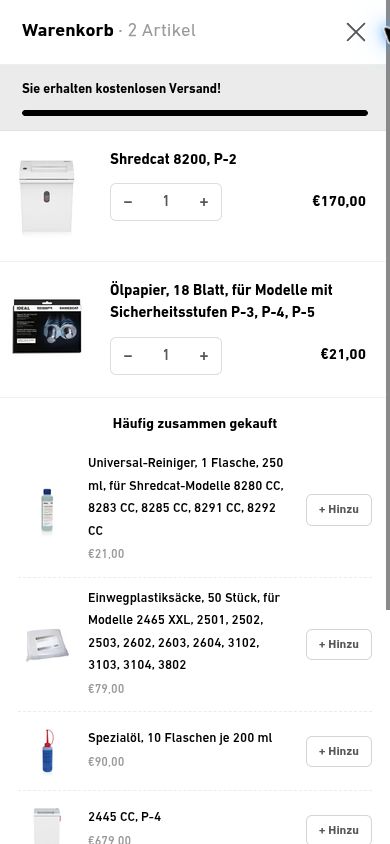
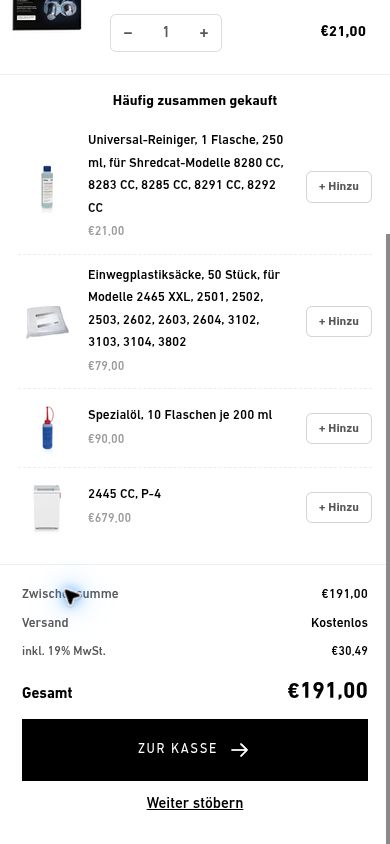
I would first check reliable product selection, understandable prices and a working next step. Include readability and operation on a phone. A covered button or unreadable message can be investigated directly. You don't need an experiment to justify repairing an actual fault. You do need to verify that the correction works across the relevant states.
Competing designs that both function are a different question. Whether another image sequence sells better remains a hypothesis. Record the observation behind it and what you want to learn. The MECLABS heuristic can help organize questions about motivation, value, effort and concerns. The effect of the particular implementation still needs its own examination afterward.
Choose changes you can follow
If prices, copy, photography and campaigns change together, later interpretation becomes difficult. For a small store, I would work on a limited area and record its initial state. Describe the problem, the change and the date. Include other activity running during the same period. Weeks later, you'll still know what happened and which explanation was only an assumption.
Consider a product whose dimensions appear only in a download. You add an understandable version beside the product information and ask another participant to attempt the same task. Can they now find the relevant measurement without help? That's an observable improvement. Whether it creates more orders needs further evidence and an appropriate observation period.
Use A/B testing when the conditions fit
An A/B test needs a defined comparison, an appropriate outcome and enough observations for the intended conclusion. With low traffic, a test may take a long time or detect only large differences. A universal minimum visitor count for every Shopify store would be misleading. Baseline performance, the effect of interest and the chosen method all affect the requirement.
Plan the experiment before starting it. While a useful result isn't feasible, continue research and fault correction. Collect stronger evidence, improve measurement and work on specific tasks. The article on A/B testing and sample size explains the methodological questions. An inconclusive test doesn't justify announcing success, but it also doesn't automatically prove that the change had no effect.
Keep the work manageable
A small repeatable process is enough to begin. Collect questions from service and search, observe one purchase task and select a supported improvement. After implementation, check the same journey again. The routine should fit your operation. A short record of owners and observations is more useful than a large backlog that nobody revisits.
Each cycle can make the diagnosis more specific. You may discover that visitor relevance needs attention first. Product information may be the main problem. Or the journey may function well while the offer needs a different explanation. Those distinctions prevent unnecessary rebuilding. The Shopify CRO audit shows how individual observations can form a structured review.
Keep the working record useful for someone who wasn't present. “Changed product details” says little about the original difficulty. A sentence explaining the task, the missing information and the subsequent check makes future decisions easier. If the team later revisits that product group, it can build on what was observed instead of repeating the same debate.
Common questions about CRO with low traffic
Is CRO worthwhile with only a few orders?
Yes, when the method fits the available evidence. Correcting faults, improving product information and observing purchase tasks are useful starting points. Reliable estimates of a small conversion improvement usually need more data than a small store can collect over a short period.
Should I spend more on advertising first?
First check whether visitors find an appropriate offer and can complete the journey. Additional traffic may then make sense. It won't make a confusing purchase panel understandable. Acquisition and improvements to the store should be planned together around the actual problem.
Which metric is most useful at the beginning?
That depends on the task. Completed orders matter, but successful variant selection or repeated service questions may also be relevant. Choose a measure that can be recorded reliably and relates to the particular customer task you're trying to improve.
Want to identify a useful starting point despite low traffic? In a CRO consultation, we can review visitor sources, product pages and the purchase journey. We'll choose a task that can be investigated sensibly with the evidence your store currently has.